
2026 Steinbach Visiting Scholars
Dr. Josh Mangelson
Brigham Young University
Electrical and Computer Engineering
June 17-18
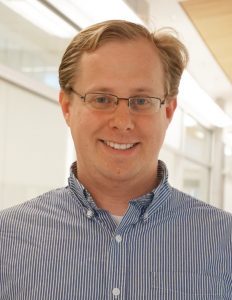
Dr. Joshua Mangelson is an Assistant Professor at Brigham Young University. He received PhD and Masters degrees in Robotics from the University of Michigan. He then completed a post-doctoral fellowship at Carnegie Mellon University before joining the Electrical and Computer Engineering Department at BYU in 2020. Dr. Mangelson is an expert in marine and field robotic perception, localization, and autonomy. At BYU, he runs the Field Robotic Systems Lab focused on the development and deployment of robotic perception and autonomy in unstructured outdoor environments with a major focus on the marine domain (both at and below the surface). He currently serves as an Associate Editor for IJRR , T-FR, and RA-L and as an Area Chair for RSS. His research has been recognized with various awards including multiple best paper/poster awards as well as the Office of Naval Research Young Investigator Award (in 2024).
Scheduled Talks
June 17th, 12 pm – 1 pm, Department-wide Seminar in Smith Conference Room
Title: Robust UUV/USV Single/Multi-Agent Localization and Semantic Mapping for Marine Autonomy
Abstract: My research group at BYU is directly focused on developing marine perception and autonomy solutions that enable robust deployment of below- and at-the-surface marine robotic systems to address real-world problems. In this talk, I will present several recent and on-going projects focused on UUV and USV localization including UUV/USV odometry, robust cooperative underwater localization under acoustic communication constraints, and cross-modality localization between sonar sensing modalities. I will then cover some of our recent work towards enabling open-set outdoor 3D metric-semantic mapping for marine systems operating in complex unstructured coastal zones. I will close with an overview of several tools we hope will be of use to the broader marine robotics community including the marine robotics simulator HoloOcean and a low-cost UUV design.
June 18th, 2 pm – 3 pm, Institution-wide Seminar in Redfield Auditorium
Title: Progress in Marine Robotic Perception, Localization, and Mapping for Ecological Monitoring, Infrastructure Inspection, and Defense
Abstract: Research in marine robotics is uniquely positioned to help us address fundamental challenges to real-world problems in our world. Examples include (1) coral reef & marine ecosystem monitoring, (2) energy and civil infrastructure inspection and maintenance, and (3) shipping/national defense challenges. My students and I at BYU are working on developing and deploying marine robotic perception, localization, and mapping solutions in each of these domains. In this talk, I will provide an overview of each of our projects within these areas and provide a high-level discussion of on-going work in marine robotic perception, localization, and perception. I will also briefly cover simulation and hardware tools we have developed with the hope of enabling broader participation in marine robotics research.
Dr. Anya Waite
Dalhousie University
Oceanography
June 29-30
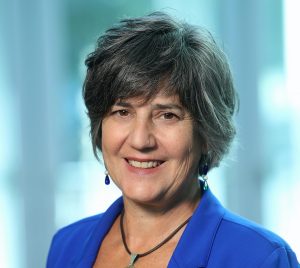 Dr. Anya Waite is Professor of Oceanography at Dalhousie University in Canada. She was CEO and Scientific Director of the Ocean Frontier Institute 2018-2026. She was a post-doctoral scholar at Woods Hole Oceanographic Institution in the mid-1990s and an Engineering Professor in Australia (1997-2014) before becoming Section Head of Biological Oceanography at the Alfred Wegener Institute (2014-2018). Dr. Waite served as co-chair of the Global Ocean Observing System and Canada’s representative on the World Meteorological Organization’s Greenhouse Gas Study Group. She was recently awarded the 2024 Japanese Oceanographic Society’s Yoshida Award for her oceanographic research on biological physical coupling, the King Charles III Coronation Medal for outstanding service to Canada, and was appointed member of the French Ordre des Palmes Academiques for her international service supporting research connection between Canada and France. She is a 2026 Steinbach Scholar for the MIT/WHOI Joint Program.
Scheduled Talks
June 29th, 3 pm - 4 pm, Institution-wide Seminar in Redfield Auditorium
Title: Bio-physical coupling controls the future of Arctic production under climate chance: A quantitative comparison of the physical supply and biological uptake of new nitrogen in the Arctic Ocean
Abstract: Nitrogen constrains phytoplankton biomass across the Arctic Ocean, with nitrate (NO3) supply to the surface waters fuelling new primary production and net carbon drawdown. In this Review, we explore the physical mechanisms driving NO3 fluxes to the euphotic zone across the Arctic Ocean and how biological processes respond.
The volume and inflow depth of Atlantic and Pacific Ocean waters, together with sea ice and halocline dynamics, govern internal physical mixing of NO3. Respectively, these inflows supply ~34 +/- 5 kmol NO3 s−1and 9 +/- 1 kmol NO3 s−1, spreading at mid-depth. NO3 from below the euphotic zone is mixed upwards via several mechanisms. Overall, NO3 fluxes associated with diffusive and turbulent mixing, submesoscale fronts and cyclonic mesoscale eddies are relatively low (on the order of ~0.1–0.7 mmol m−2 per day) but cover a large area, with peaks associated with wind events or individual strong eddies.
By comparison, upwelling-driven fluxes are much stronger (on the order of ~1 mmol m−2 per day) but are more localized. Near-inertial and tidal mixing over the Arctic Ocean’s complex bathymetry drives perhaps the strongest NO3 fluxes, for example, reaching 4.5 mmol m−2 per day in the Barents Sea.
We use a Damköhler Number approach to simplify the analysis of biological-physical coupling over multiple scales and processes. Comparing physical nitrate fluxes with observed biological NO3 uptake rates indicates that the internal physical supply of NO3 only limits primary productivity in 9 of the 17 cases we considered. It follows that light limitation and lagged growth responses result in the observed excess NO3 remaining in the surface waters about half the observations we considered. Future productivity in the Arctic is likely to be constrained equally by biological and physical processes. Both must be considered to generate a balanced view of the Arctic Ocean’s future productivity as the earth warms.
June 30th, 12 pm - 1 pm, Institution-wide Seminar in Clark 507
Title: Impact of mesoscale eddies on rock lobster recruitment: Bio-physical coupling and ecosystem dynamics in the eastern Indian Ocean
Abstract: We investigated the impact of unique regional physical oceanography on recruitment of the Western Rock Lobster, the basis of Australia’s most valuable fishery. While most western boundary currents are cool, and flow from high-to-low latitudes, the warm Leeuwin Current (LC) flows from low to high latitude on the western Australian coast. Using five years of in situ field data (2003 – 2011) and numerical simulations, we explore the impact of LC mesoscale eddies on upwelling, material transport, and the health of rock lobster larvae. This body of work resulted in >25 papers over 15 years (2004 to 2019) and was the recipient of the 2024 Yoshida Award from the Japanese Oceanographic Society.
Mesoscale eddies in the eastern Indian Ocean are seasonally modulated by interactions among the Leeuwin Current, its underlying countercurrent(s), and the subtropical gyre circulation of the Indian Ocean. Repeat detailed in situ measurements allowed us to conduct comparative studies on physical dynamics, ecosystem structure and larval health between cold core and warm core mesoscale eddies. We quantified plankton size structure and lipid content, organic carbon and nitrogen stable isotope ratios, mapping the nutrient cycle, biological production patterns and food web structures inside mesoscale eddies.
Phytoplankton concentrations were higher in warm eddies (rich in diatoms) than in cold eddies (rich in flagellates and dinoflagellates), but a seemingly contradictory result indicated that cold eddies had more lipid-rich zooplankton and more energy-rich larvae. Poleward LC flow capped cold core eddies, limiting the upward reach of upwelled cores and their visibility from space. In addition, higher chlorophyll concentrations observed via satellite within warm core eddies may in fact originate from coastal regions, and may not serve as a good indicator for zooplankton and larval food sources. Vertically integrated primary production increased as the mixed layer shallowed in cold eddies. Interannual variations in mixed layer depth controlled the regional-scale upwelling and primary production.